
Europe Without Crowds: Where to Go When the Famous Places Feel Overdone
May 2025
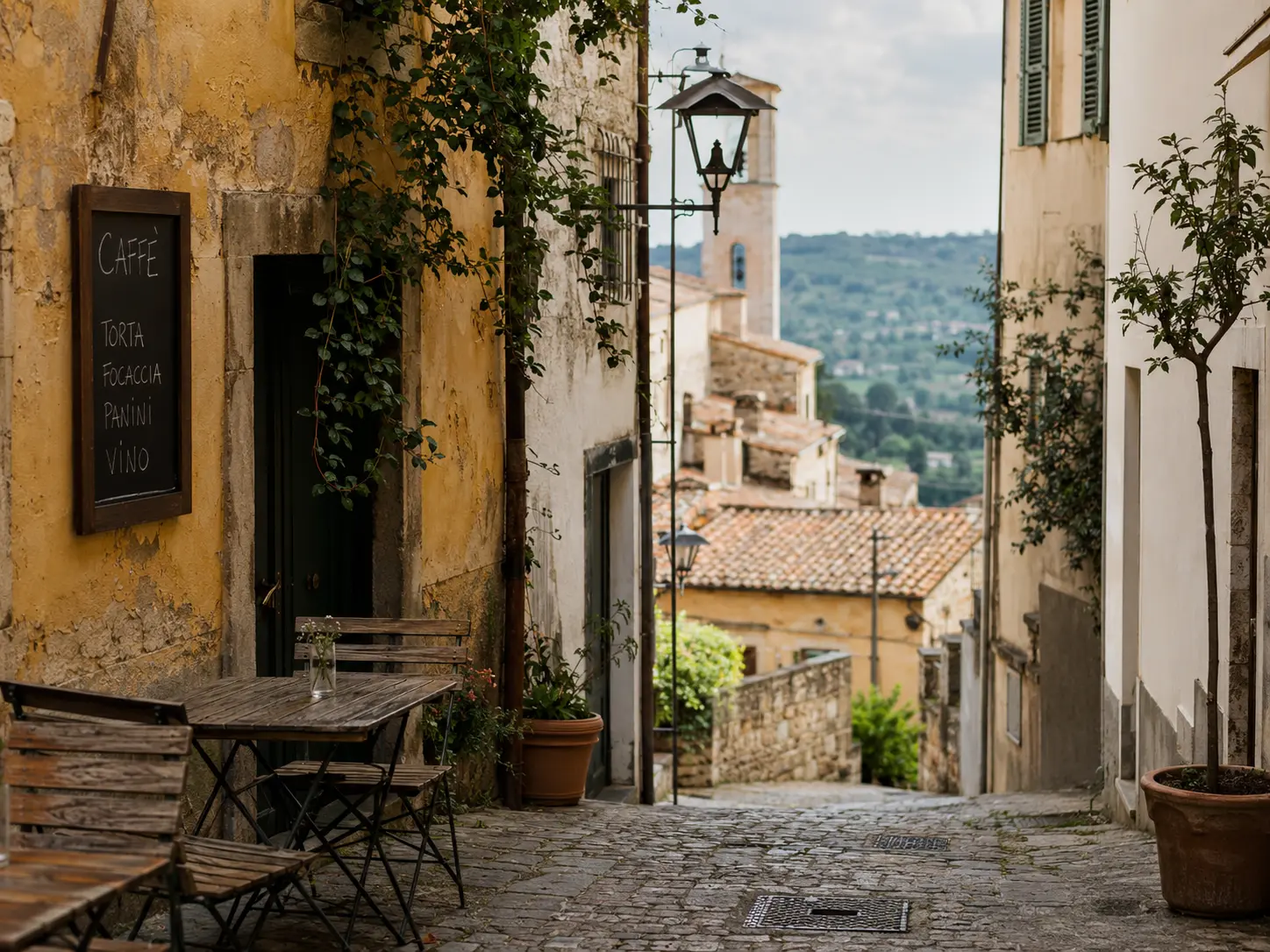
The same thirty square kilometres of Europe feel worn out.
Venice's bridge, Santorini's admittedly brilliant sunset, and Amsterdam's canals. Everywhere you go, you see a queue for a photo that makes everyone look as if they stumbled on the place by accident.
Most famous places became famous for good reasons. Venice is truly beautiful and absurd. Santorini really does look like that. Prague is not faking the architecture. Barcelona did not become popular because of low cost flights.
Then Instagram, low-cost flights and list-making blogs got involved.
Now the famous version often feels less like travel and more like admin. Book the table. Queue for the viewpoint. Photograph the street. Pretend not to notice the other two hundred people pretending the same thing. Pay too much for a spritz in a plastic mood of disappointment.
This is not an argument for avoiding beauty. Only a fool avoids beauty. It is an argument for being less obedient.
Antigramer works on a fairly simple rule: work out what you wanted from the famous place, then find somewhere that still gives you that feeling without making you perform it.
Fame is often circulation, not proof.
A place can be famous and still be good. It can also be famous and completely ruined for the kind of trip you thought you were booking. Both things can sit in the same church square, glaring at each other over a twelve euro gelato.
How to use this guide
Do not search for hidden gems. That phrase should be sealed in a concrete box and dropped somewhere deep in the Atlantic.
Search for the thing you actually want.
If you want Venice, do you want canals, old trade routes, boat light and a bit of damp grandeur?
If you want Mykonos, do you want Greece or do you want a nightclub with geography?
If you want Amsterdam, do you want canals, bikes, museums and tall houses, or do you want the Amsterdam brand served in pre-chewed form?
Once you ask that properly, the map gets bigger.
The places below are not consolation prizes. Some are smaller. Some have less glamour. Some require more effort. That is fine. A quieter place is usually quieter for a reason. The question is whether that reason matters to you.
The quick map
- Venice → Trieste or Chioggia
- Lake Como → Lake Orta
- Positano → Tropea or Cetara
- Mykonos → Naxos
- Santorini → Syros or Serifos
- Barcelona → Girona
- Amsterdam → Utrecht or Ghent
- Lisbon → Coimbra or Braga
- Prague → Olomouc or Telc
- Dubrovnik → Sibenik or Korcula
- Hallstatt → Bad Aussee
- Lofoten → Senja or Vesteralen
Now for the actual reasoning, because a swap without reasoning is just another list pretending to be useful.
Venice: go for water, old trade routes and damp grandeur
Venice is not bad. That take is lazy, and it usually comes from people who visited for four hours in August after eating near San Marco.
Venice is one of the strangest and most brilliant things humans have built. The problem is the tourist version of it. That version has been squeezed into a narrow routine of bridges, gondolas, queues and lunch decisions made under duress.
The place has started to feel like a masterpiece being used as a corridor.
If you still want Venice, go in winter. Take the fog. Take the damp. Take the quiet streets when the city looks half real and half dream. That is the better calculation.
If you want the wider Adriatic feeling, go to Trieste.
Trieste is not instantly pretty in the same way. Good. Instant prettiness is often the first stage of civic death. Trieste has Habsburg bones, Italian coffee, Balkan weather in the air and a port city mood that cannot be faked. Joyce wrote there, which is either a recommendation or a warning, depending on your tolerance for difficult men in cafes.
It feels like somewhere people still have errands, which is often the thing missing from over-visited cities.
Chioggia is the purer lagoon swap. Smaller, rougher and more workaday, it has canals, fishing boats and the kind of local life Venice has been trying to remember. It will not give you the basilica. It will give you the lagoon without the full circus.
Choose Trieste if you want a real city with history in its teeth.
Choose Chioggia if you want Venice's cousin who still has a proper job.
Lake Como: go for the lake, not the celebrity weather
Lake Como is beautiful. Nobody sensible denies this.
The trouble is that Lake Como now carries too much luggage that is not yours. Luxury villas. Famous people. Boat photos. Hotels that price themselves as if they personally invented water.
There is still a good trip there, especially outside the busiest months. But if what you want is northern Italian lake romance, Lake Orta is the better move.
Orta is smaller. That is not a defect. It has a compact old town, quiet water, an island monastery and the feeling that nobody has yet turned the whole place into a global mood board.
You walk slower there.
The tradeoff is obvious. Orta has less variety, less grand hotel theatre and fewer famous names floating around in sunglasses. People who need the social proof will find it lacking.
Good. That is how you know it still works.
Positano: go for cliffs, sea and food, not the lemon-branded queue
Positano looks fake even when it is real.
The village drops down the cliff in pastel layers, the sea behaves itself for photographs and the whole thing appears to have been arranged by a committee of very emotional architects. It is ridiculous. It is also, in summer, hard work.
Stairs. Prices. Crowds. People trying to look effortless while sweating through linen. Restaurants with views, which is sometimes code for food that gave up once the balcony did the selling.
If you want the Amalfi Coast but less of the performance, try Cetara.
Cetara is still on the coast. It still has the cliffs and the water. It also has fishermen, anchovy sauce and a small pebble beach that has not been bullied into becoming a lifestyle set. It will not give you Positano's vertical theatre. It will give you dinner with a pulse.
If you want the bigger coastal reset, go south to Tropea.
Tropea sits on a cliff in Calabria, looking out over water that does not need your approval. It has beaches, old lanes and a price level that does not make you feel like you are paying rent on the entire Tyrrhenian Sea.
Getting there takes more effort. That is the filter.
A surprising number of good places are still protected by awkward logistics.
Mykonos: go for Greece, not invoice-based glamour
Mykonos has suffered from a terrible medical condition: it became a brand.
The island is still beautiful underneath the machinery. There are beaches, white houses, windmills and Cycladic light sharp enough to make ordinary walls look holy. But too much of the modern Mykonos trip has been colonised by bottle service, beach clubs and the kind of pricing that suggests the feta has a lawyer.
Naxos is the better island for most people.
It has better beaches. It has a proper old town. It has mountain villages, food production, local cheese, potatoes, citron liqueur and a scale that lets you escape yourself for more than an afternoon.
You can spend the morning in the old town, drive inland for lunch, and still end up in the sea before dinner.
Mykonos sells Greece as an event. Naxos behaves like an island.
What you lose is glamour. Naxos has less of it, and this is one of the great arguments in its favour. You can still have a very good time. You just do not have to remortgage your dignity to do it.
Santorini: go for white walls and island drama, not the sunset traffic jam
Santorini is the rare place that looks exactly like the photographs and still somehow disappoints people.
This is not the island's fault. The caldera is spectacular. The villages are brilliant against the cliff. The sunsets do what they are paid to do.
The issue is the behaviour that has grown around it. Sunset has become a scheduled public event. Everyone knows where to stand. Everyone knows what to shoot. Everyone wants the same miracle at the same time.
Miracles do not respond well to crowd management.
Syros is the better choice if you want culture with your Cyclades.
It has neoclassical buildings, a real island capital, food, music and enough whitewashed Cycladic material to satisfy the eye without turning the whole place into a posing deck. It feels lived in. That will bother some people.
Let them go to Oia.
Serifos is the better choice if you want quiet, rock, beaches and a hilltop village that has not yet been turned into a global backdrop. It is more limited. There are fewer restaurants and fewer ways to be entertained.
That is fine. Islands are allowed to be islands.
Barcelona: go for Catalonia, not the same weekend everyone else booked
Barcelona is brilliant and tired.
It has Gaudi, food markets, beaches, museums, neighbourhoods and that rare ability to make a short trip feel both easy and full. It also has too many visitors trying to extract the same three-day version from it.
A city can only absorb so much identical enthusiasm before it starts to look irritated.
Girona is the cleanest swap.
It is close enough to Barcelona that nobody can complain about logistics with a straight face. It has medieval walls, a serious old town, a Jewish quarter, good food and enough Catalan identity to make the trip feel like more than a detour.
The train from Barcelona is easy, but the mood changes quickly once you are on the walls above the old town.
You will not get Barcelona's scale. You will not get the same nightlife, the same museums or the same sea-front sprawl.
You will get a city where walking still feels like walking, not like joining a moving queue.
Spend time on the walls. Eat properly. Take the train to Barcelona if you need your Gaudi fix. Then come back to Girona and sleep like a person who made a sound decision.
Amsterdam: go for canals, not the Amsterdam brand
Amsterdam is over repeated.
The city is lovely. The problem is that the same version has been sold too many times: canals, bikes, gables, museums, weed jokes and a vague sense that everyone has become more relaxed by standing near water.
The reality is sharper. Amsterdam is expensive, crowded and increasingly forced to manage the kind of visitors who treat a living city as a stag party with heritage attached.
Utrecht is the sensible Dutch answer.
It has canals with a double-level waterfront, old streets, students, locals, trains and the pleasant sense that life has not been arranged entirely for your weekend. It is close to Schiphol, which removes the usual excuse.
You lose the major museum haul. That matters if your trip is built around Rembrandt and Van Gogh. If your trip is built around canals, cafes, walking and Dutch city life, Utrecht is an excellent swap.
Ghent is the better alternative if your Amsterdam craving is really northern Europe with water and old buildings.
It has a medieval centre, a proper university city edge, Belgian food, serious art and enough grit to keep it from becoming Bruges in costume. People who expect a polished postcard sometimes underrate Ghent.
They are wrong. Ghent is better with a bit of dirt under the nails.
Lisbon: go for Portugal, not the content package
Lisbon has become the answer to too many questions.
Cheap Europe? Lisbon. Digital nomad city? Lisbon. Tiles? Lisbon. Food? Lisbon. Warm winter? Lisbon. Somewhere that feels old and new and slightly broken in an attractive way? Lisbon again.
The city is still lovely. It is also carrying a ridiculous amount of expectation. Some neighbourhoods now feel as if they are being translated for visitors in real time.
Coimbra gives you a different Portugal, especially if you stay long enough to hear the city after the day visitors have gone.
It has the old university, steep streets, river views, student life, its own fado tradition and a slower rhythm that suits people who can cope without every cafe having a laptop policy. It is less worldly than Lisbon. That is not a crime.
Braga is the northern option.
Baroque churches, sanctuary staircases, proper local life and a city that does not spend all day winking at foreign arrivals. It works for people who want history without the feeling that every second doorway has become an investment product.
Lisbon still deserves care. Go in March, April, October or November if you can.
But Portugal is bigger than one city with tram photos.
Prague: go for old squares and beer, not stag party archaeology
Prague is magnificent.
The centre can also be grim in that special way beautiful cities become grim when too many visitors arrive with the same low expectations. Cheap beer. Costumes. Pub crawls. A vague plan to see the clock and behave badly near Gothic stone.
The architecture deserves better company.
Olomouc is the smarter Czech city for people who want beauty without the fog of mass tourism.
It has a grand square, Baroque confidence, university life and the kind of local rhythm Prague's old centre loses in peak season. It will not give you Prague Castle. It will not give you that enormous capital city feeling.
It will give you Moravia without the pantomime.
Telc is the smaller, more exact option.
Its square is almost suspiciously pretty, the sort of place that looks as if a film crew has just stepped out for lunch. It is very small. You can see it quickly. That is the catch.
Use Telc as part of a wider Czech trip. Use Olomouc as a base.
Use Prague carefully, preferably in winter, when the cold thins the herd and the city starts behaving like itself again.
Dubrovnik: go for stone, sea and history, not television residue
Dubrovnik has one major design flaw: the old city is too good at concentrating people.
This worked well for medieval defence. It works less well when cruise ships arrive and half the planet wants to walk the walls at the same time.
The city is still extraordinary. The stone, sea and walls are not fake. The trouble is the crush, the pricing and the strange afterlife of television fame. Dubrovnik now has to be both a real place and a global set.
Sibenik is the better mainland swap.
It has medieval stone, a cathedral that actually deserves the fuss, access to waterfalls and far less of the summer madness. It is less famous and has fewer tourist layers. That can feel inconvenient. It can also feel like oxygen.
Korcula is the island answer.
A compact medieval town, wine country, sea air and enough history to keep the brain awake between swims. It is not as architecturally dramatic as Dubrovnik. Very few places are.
But you can breathe. Some days that is worth more than another famous wall.
Hallstatt: go for the Salzkammergut, not the screensaver
Hallstatt is what happens when a village becomes a screensaver and then has to live with the consequences.
It is almost unfairly pretty. Lake, mountains, church spire, old houses, all arranged with the subtlety of a tourism fever dream. Of course people came. Of course they photographed it. Of course the photo became the reason to go.
Now the village has the odd sadness of a place that many visitors barely enter. They arrive to collect proof. The proof is the product.
Bad Aussee is the better answer if you want the region rather than the image.
It is a working spa town in the Salzkammergut, surrounded by lakes, mountains and actual Austrian life. It does not have Hallstatt's single perfect viewpoint. It has something more useful: room.
That means room to stay, room to walk and room to let the place be more than a picture.
Give it a day. The quieter places often have the manners not to perform immediately.
Lofoten: go for the north, not the tripod queue
Lofoten is dramatic in the old sense of the word. Peaks over sea. Fishing villages. Weather that looks like it has plans. Light that makes photographers behave as if they have been personally selected by the universe.
That is also why everyone turned up.
The great joke of modern travel is that people keep going to remote places together. Then they stand in the same car parks, photograph the same cabins and call it wilderness.
Senja is the sharper alternative.
It has mountains dropping into the sea, fishing settlements, northern light, summer light and fewer people trying to recreate the same shot. It is less developed than Lofoten. That is the deal.
Vesteralen is gentler.
It has whale watching, bird cliffs, open northern roads and enough space to make you remember that Norway is not short of scenery. It is less instantly photogenic in the obvious way. Fine. Obvious photographs are rarely the best part of a trip.
Go north for the north. Not for the queue pretending it discovered the north.
How to plan Europe without crowds
The easiest improvement is timing.
May and late September fix a lot of Europe. October fixes even more. November is underrated by people who think all travel must involve bare ankles and outdoor dining. Winter can be brilliant in cities that have become unbearable in summer.
The second improvement is staying overnight.
Day trips create some of the worst crowd patterns. They turn places into lunch stops with monuments. Sleep there and you get the better hours: early morning, late evening and the small dead zone after the coach groups leave.
The third improvement is accepting a little friction.
A ferry, slower train or awkward connection can do more for crowd control than any tourism board policy. Most people will not bother. This is very useful. Let their laziness work for you.
The fourth improvement is choosing a base that functions.
A good base has supermarkets, local restaurants, trains, buses and residents who are not all waiting for you to leave. This sounds obvious. Travel planning often forgets it. People choose the prettiest place and then spend three days trapped in expensive inconvenience.
Beauty is better when you can buy toothpaste.
The Antigramer rule
Do not ask where everyone is going.
Ask what they were hoping to find there.
Venice was water, trade and atmosphere. Trieste and Chioggia still have that.
Mykonos was beaches and Cycladic light. Naxos still has that, with better food and less nonsense.
Amsterdam was canals and northern city life. Utrecht and Ghent still have that, with fewer people treating the place like a rental costume.
The famous place may still be worth visiting. There is no prize for turning avoidance into a personality. Venice in winter can be magic. Prague in January can be sharp and beautiful. Lisbon in March can still remind you why everyone lost their minds about it in the first place.
But once you split the desire from the name, the map opens up.
You do not need a secret Europe.
You need a less obedient one.
Explore alternatives on the Antigramer map, or browse Fresh Air destinations and their Heat Scores.